
Life-force Movement (Brand) · Sep 28, 2026
Beyond Yoga: Why Internal Energy Cultivation Is the Next Evolution of Holistic Wellbeing
Going beyond yoga does not mean abandoning it. It means asking what else becomes possible.
Yoga has become almost synonymous with wellbeing.
For many people, the practice means stretching after work, improving flexibility, building strength, slowing the breath or finding a few quiet minutes away from a demanding schedule. These are meaningful benefits, but yoga can also be much more than a physical practice.
Long before yoga became part of the modern wellness industry, traditional systems explored a deeper relationship between movement, breath, attention and inner experience. The body was not treated simply as something to make stronger or more flexible. It was also something to become more aware of.
That distinction opens an interesting question for modern wellbeing.
What happens when we stop treating movement as the destination and begin using movement as a way to explore what is happening within?
This is where internal energy cultivation enters the conversation.
Within traditions such as Hatha Yoga, Qigong, Taiji and Tibetan breathwork, practices have developed around the relationship between physical movement, breathing, attention and what traditional systems describe as life-force or internal energy. These traditional concepts should not automatically be treated as scientific measurements. They belong to particular philosophical and experiential frameworks.
Yet the underlying practice of becoming more aware of the body, breath and mind remains highly relevant to modern life.
Life-force Movement brings several of these traditions into a contemporary practice that explores movement, conscious breathing, awareness and energy cultivation as interconnected aspects of wellbeing.
The question is not whether yoga needs to be replaced.
It is whether we are ready to explore everything that can exist beyond the physical form of the practice.
Yoga Has Always Been More Than Stretching
The modern image of yoga is often dominated by physical postures.
Someone holding a difficult pose. A carefully designed studio. Mats arranged in perfect rows. Flexibility being demonstrated as though the ability to place your foot behind your head represents the final destination.
But the history and philosophy of yoga are considerably broader than physical flexibility.
Hatha Yoga includes physical postures and practices involving breath, attention and preparation of the body. Within traditional contexts, the physical body was not merely something to sculpt. It could also become a foundation for deeper awareness.
This distinction matters because modern wellness can easily reduce a complex practice into something easier to package and sell.
Stretch.
Sweat.
Relax.
Repeat.
There is nothing inherently wrong with this approach. Physical movement can be valuable in its own right. But it can also leave an unexplored dimension of practice.
What happens when you become interested not only in what the body can do, but in what you can perceive while the body is doing it?
That question takes the practice somewhere deeper.
For those exploring a broader Hatha Yoga and internal practice, the emphasis can shift from achieving a particular shape toward developing awareness of posture, breathing, movement and internal experience.
The body becomes the starting point rather than the entire destination.
The Difference Between External Fitness and Internal Awareness
Modern exercise tends to focus on visible outcomes.
More strength.
Greater flexibility.
Better endurance.
Improved coordination.
A healthier body composition.
These are legitimate goals, but they describe what happens externally.
Internal practice asks a different set of questions.
Can you feel unnecessary tension before it becomes obvious?
Can you notice how your breathing changes when you become stressed?
Can you remain relaxed while moving?
Can you sense subtle changes in posture and balance?
Can you stay present instead of allowing the mind to wander through every movement?
These questions are harder to measure with a fitness tracker.
They require attention.
This is one reason Life-force Movement approaches movement through more than physical conditioning. The methodology brings together Hatha Yoga, Qigong, Hunyuan Taiji and Tibetan breathwork as different pathways for exploring the relationship between body, breath, awareness and internal cultivation.
The emphasis is not on rejecting physical fitness.
It is on recognising that physical fitness and internal awareness can coexist.
You can become stronger while also becoming more sensitive.
You can become more flexible while learning to recognise tension.
You can develop physical discipline while becoming less dependent on force.
That is where the idea of holistic wellbeing becomes more meaningful.
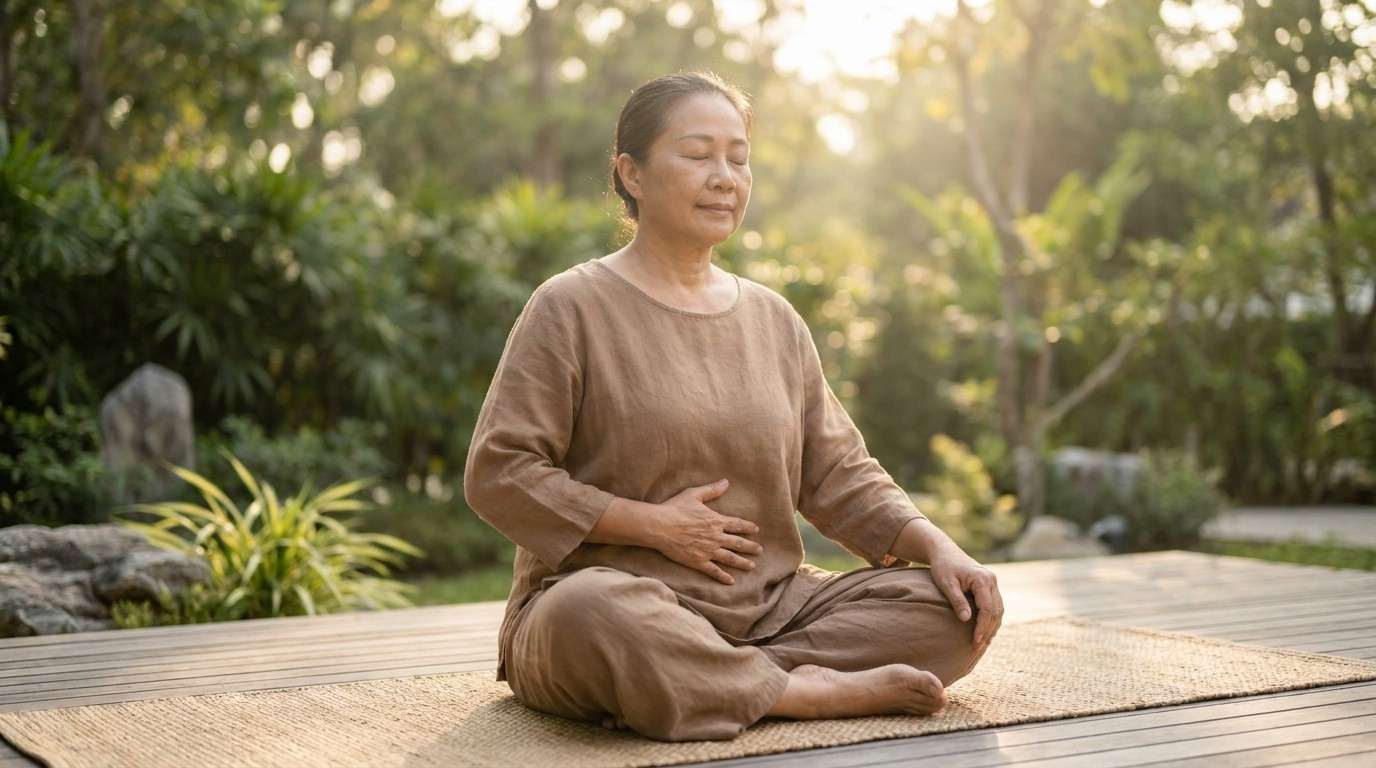
What Does “Internal Energy” Actually Mean?
The phrase “internal energy” can sound mysterious. It is also easy to misunderstand.
In traditional Chinese and yogic systems, concepts relating to life-force, vitality or internal energy have specific philosophical and cultural meanings. Qigong, for example, traditionally works with the concept of qi, while yogic traditions use concepts such as prana.
These concepts should not simply be presented as though they are identical to scientifically measurable forms of physical energy.
A grounded approach allows traditional language to remain within its proper context.
When practitioners talk about cultivating energy, they may be describing an experiential process involving breath, attention, movement, vitality and awareness. The experience can be meaningful without requiring every traditional explanation to be presented as scientific fact.
This distinction is important in modern wellbeing because there is a temptation to turn traditional concepts into dramatic promises.
Internal energy cultivation does not need exaggerated claims to be valuable.
The practice can be approached more simply.
Become aware of your body.
Become aware of your breathing.
Become aware of your attention.
Notice how movement changes your internal experience.
Notice what happens when unnecessary tension decreases.
Over time, these observations can become part of a deeper practice.
Qigong: Learning to Move With Awareness
Qigong offers a particularly clear example of internal cultivation.
The movements are often slow, controlled and repetitive. From the outside, they can appear almost effortless.
But slow movement changes the experience of the body. When you move quickly, many details disappear.
When you slow down, you begin to notice weight, balance, tension, breathing and coordination. You have more time to feel what is happening rather than simply completing the movement.
This is part of what makes Qigong practice interesting as a complement to conventional exercise.
It is not primarily about how much weight you can lift or how quickly you can move.
It is about the quality of attention you bring to movement.
That does not make it superior to strength training, running or other forms of exercise. They serve different purposes.
Instead, Qigong offers another dimension.
The body moves.
The breath participates.
Attention remains present.
The practitioner learns to observe.
This can make seemingly simple movements surprisingly rich.
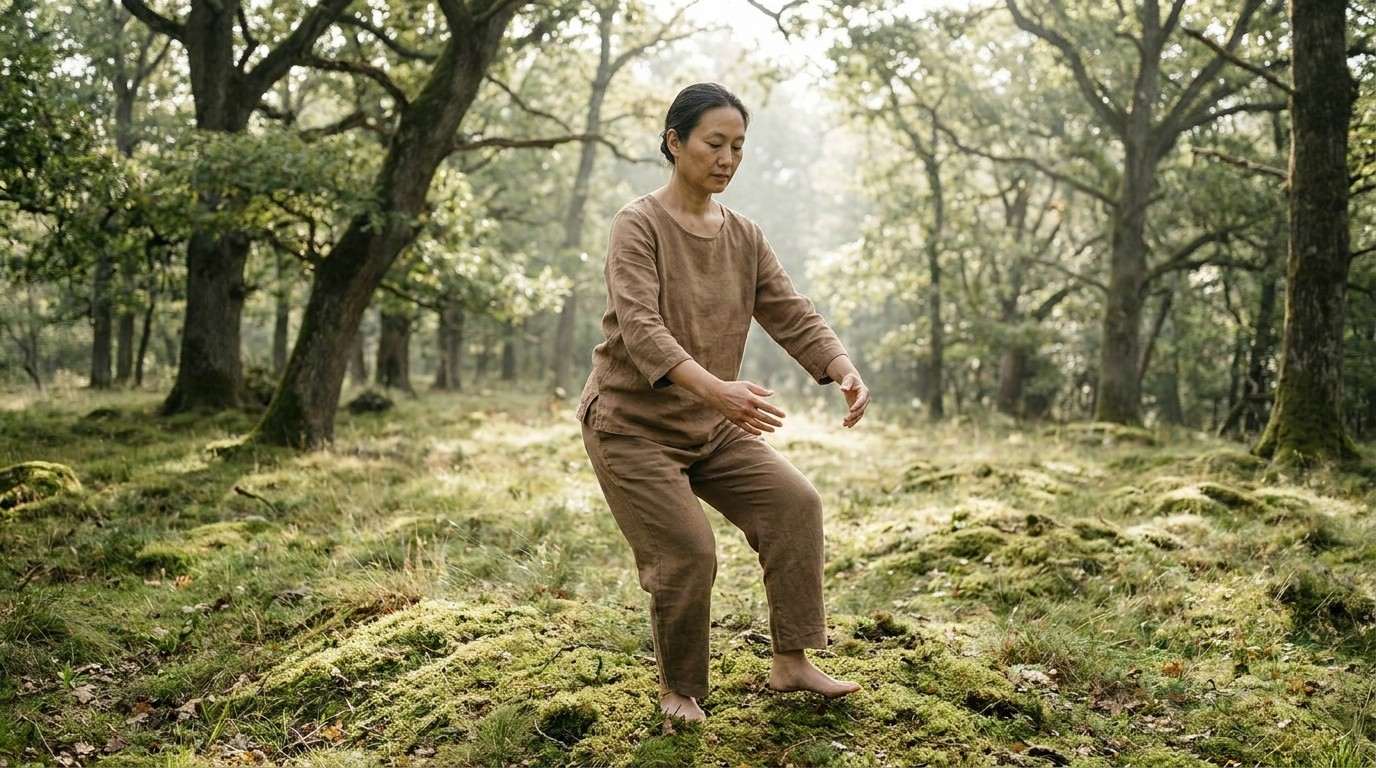
Hunyuan Taiji and the Art of Integration
Hunyuan Taiji offers another pathway into internal practice.
Taiji is often recognised for its slow, flowing movements, but its deeper practice involves coordination between body, breathing, attention and intention.
The movements are not simply choreography.
They can become a way of exploring how the whole body works together.
A shift of weight affects posture.
Posture influences balance.
Breathing changes with movement.
Attention influences how movement is experienced.
The different elements begin to communicate.
Through Hunyuan Taiji and internal arts, practitioners can explore this relationship without reducing the practice to physical performance.
The objective is not to make every movement look impressive.
It is to make the movement more conscious.
This is a useful principle far beyond Taiji.
Modern life encourages fragmented attention. We work while checking our phones. We eat while watching screens. We walk while thinking about the next appointment.
Internal movement offers an opportunity to do the opposite.
One thing at a time.
One movement.
One breath.
One moment of attention.
Conscious Breathing Changes the Relationship With Practice
Breathing sits between the physical and the internal.
It is automatic, yet it can also be consciously observed.
It changes with exercise, stress, excitement, fear and relaxation. That makes it a powerful object of awareness.
Conscious breathing does not necessarily mean forcing deep breaths or following complicated techniques. Sometimes it means simply noticing the natural rhythm of breathing while moving.
Is the breath comfortable?
Is the body holding unnecessary tension?
Does the breath become restricted when concentration increases?
Can you remain aware of the breath without trying to control every part of it?
These questions bring attention inward.
Within Life-force Movement, conscious breathing is explored alongside movement and awareness rather than treated as a completely separate activity.
That integration matters.
Movement without awareness can become mechanical. Breathing without awareness can remain automatic.
Awareness without embodiment can become overly intellectual. Together, they create a different kind of practice.
Why Slower Practice Can Be Powerful
Modern wellness often follows the logic of intensity. If a little exercise is good, more must be better.
If a workout feels difficult, it must be effective.
If a practice is challenging, it must produce greater results. Internal cultivation challenges that assumption.
Sometimes the practice becomes more demanding when the movement becomes slower.
Slowing down removes momentum.
You cannot rely on speed to hide poor balance. You cannot rush through tension. You have more time to notice where attention has wandered.
This does not mean slow movement is always better.
It means that different speeds reveal different things.
Fast movement can develop responsiveness and physical capacity. Slow movement can develop sensitivity and awareness.
A balanced approach does not need to choose one and reject the other.
From Stress Management to Self-Awareness
A great deal of modern wellness is built around managing stress.
Meditation apps. Breathing exercises. Fitness programmes. Sleep trackers. Weekend retreats.
These can all have a place.
But there is a deeper question underneath stress management.
Why do we keep becoming disconnected from ourselves in the first place? Sometimes the answer is simply the environment we live in.
Constant notifications.
Long working hours.
Digital overload.
Little time outdoors.
Limited movement.
Persistent mental stimulation.
Internal cultivation does not remove these realities.
Instead, it can help develop greater awareness of how we respond to them.
You may begin noticing that your breathing changes before you consciously identify stress.
You may notice that your shoulders rise during difficult conversations.
You may notice that your mind becomes restless when you finally stop moving.
These observations are valuable.
They give you information.
And information gives you the possibility of responding differently.
The Role of Tibetan Breathwork
Tibetan breathwork introduces another dimension to the broader exploration of internal practice.
Traditional Tibetan systems contain specialised approaches to breathing, attention and internal cultivation. They should be approached with respect for their origins and with appropriate guidance rather than reduced to generic wellness techniques.
Within the Life-force Movement framework, Tibetan breathwork forms part of a broader approach that combines breathing, movement and awareness.
This is particularly relevant because not all breathwork practices are appropriate for everyone or suitable for casual experimentation.
More intense breathing is not automatically better.
A dramatic experience is not necessarily a meaningful one. Internal practice is not about forcing something to happen.
It is about developing greater awareness and sensitivity over time.
Why This Matters in the Modern World
The modern world gives us unprecedented access to information about health.
We know more about exercise, nutrition, sleep and disease prevention than previous generations could have imagined.
Yet knowledge does not automatically create embodiment.
You can read hundreds of articles about posture and still spend eight hours sitting unconsciously.
You can know that breathing matters and still hold your breath when concentrating.
You can understand the importance of rest and still feel guilty whenever you stop working.
This is why internal cultivation deserves a place in the modern conversation about wellbeing.
It brings knowledge back into experience.
Instead of simply knowing that stress affects the body, you begin to notice how stress feels in your own body.
Instead of reading about mindful movement, you experience what it means to move with attention.
Instead of treating breathing as a biological process happening somewhere in the background, you begin to experience it as part of your relationship with yourself.
That is where holistic wellbeing becomes less theoretical.
It becomes lived.
Beyond the Idea of “More”
Modern culture constantly tells us to improve.
Become stronger.
Become faster.
Become more productive.
Become more efficient.
Internal cultivation introduces another possibility.
Become more aware.
These are not necessarily opposing goals.
You can pursue physical strength while becoming more aware of how you use force.
You can improve flexibility while becoming more sensitive to your body’s limits.
You can develop endurance while learning when to rest.
You can pursue achievement without allowing achievement to become the only measure of wellbeing.
This is perhaps one of the most valuable lessons of internal practice.
Growth does not always mean adding more.
Sometimes it means becoming more sensitive to what is already there.
Beginning the Journey Beyond Yoga
Going beyond yoga does not mean abandoning yoga.
It means asking what else becomes possible when the physical practice becomes a doorway rather than the final destination.
You might begin with Hatha Yoga and become more aware of your breathing. That awareness may lead you toward Qigong. Qigong may introduce you to slower movement and internal attention. Hunyuan Taiji may deepen your understanding of balance and integration. Breathwork may reveal another relationship with attention and vitality.
The journey does not have to follow a fixed sequence.
The important thing is that the practices begin to communicate with one another.
The body prepares.
The breath becomes more conscious.
Movement becomes more attentive.
The mind becomes quieter.
Awareness becomes deeper.
That is the territory of internal cultivation.
For those who want to explore the practice in a more immersive setting, Life-force Movement retreats provide dedicated time and space for movement, breathwork and internal practice away from the pace of everyday life.
A retreat is not necessary to begin.
Sometimes the first step is much smaller.
Sit quietly.
Notice your breathing.
Feel your body.
Move slowly.
Pay attention.
The Next Evolution May Be Deeper Awareness
The future of holistic wellbeing does not necessarily require us to abandon what we already know.
We can continue to value exercise, nutrition, sleep, medical care and physical fitness.
But perhaps we can also make room for something that is harder to measure.
Awareness.
The ability to sense what is happening inside the body.
The ability to recognise tension before it becomes overwhelming.
The ability to breathe consciously.
The ability to move without constantly chasing performance.
The ability to experience stillness without immediately needing stimulation.
These are not glamorous skills.
They do not necessarily produce dramatic results overnight.
They require patience.
But that may be precisely why they matter.
Life-force Movement offers one contemporary framework for exploring these ideas through Hatha Yoga, Qigong, Hunyuan Taiji, Tibetan breathwork, mindful movement and energy cultivation.
The deeper invitation is not simply to go beyond yoga.
It is to go beyond the idea that wellbeing is only about what the body looks like or what the body can accomplish.
It is about developing a more complete relationship with the body, the breath and the experience of being alive.
Tags: Life-force Movement · Beyond Yoga · Internal Energy Cultivation · Qigong · Hunyuan Taiji · Tibetan Breathwork · Holistic Wellbeing · Singapore
Go deeper than the posture
Explore Hatha Yoga, Qigong, Hunyuan Taiji and Tibetan breathwork within the Life-force Movement Foundation.
Explore services More articles