
Life-force Movement (Brand) · Sep 24, 2026
Life-force Movement: A New Approach to Health for the Modern World
Beyond fitness and measurement: a way of health built on movement, breathing and awareness.
Modern health has become increasingly focused on measurement. We count steps, track sleep, monitor heart rate, measure calories, record workouts and set targets for strength, flexibility and endurance. These tools can be useful because they help us understand the body and make more informed choices about how we live. But there is a question that numbers cannot always answer: how do you actually feel in your body? You can be physically active and still feel depleted.
You can sleep for eight hours and wake up feeling mentally exhausted. You can exercise regularly while spending most of your day sitting, staring at screens and moving from one demand to another. The modern health challenge is not simply that people are doing too little. For many people, it is that life has become increasingly disconnected from the body. We spend hours thinking, planning, responding and consuming information. The body becomes something we carry around while the mind remains somewhere else.
This is where Life-force Movement offers a different perspective. Rather than treating health as a collection of separate goals such as fitness, flexibility, relaxation or stress management, it brings attention back to the relationship between movement, breathing, awareness and vitality. It is not about rejecting modern healthcare or conventional exercise. It is about asking whether there is another dimension of health worth paying attention to.
The Modern Body Is Living in an Unusual World
The human body has not fundamentally changed, but the environment around it has. Many people now spend much of their working day seated. Digital devices keep us connected almost continuously. Notifications compete for our attention. Meetings fill calendars. Information arrives faster than we can process it. Even when the body is physically inactive, the mind may remain busy. There is a strange contradiction here: we can spend an entire day barely moving and still feel exhausted by the evening. The problem is not necessarily a lack of effort. Sometimes it is the quality of the relationship between effort and recovery.
We have become accustomed to pushing through the tiredness, the deadline, the discomfort and another meeting, only to wonder why we eventually feel disconnected from our energy. A more complete approach to health begins by noticing this relationship. How do you breathe when you are under pressure? What happens to your posture when you spend hours at a desk? Where does tension accumulate? How easily can you slow down? Can you recognise fatigue before it becomes exhaustion? These questions do not replace exercise, nutrition or medical care. They add another layer of awareness, and awareness is often where meaningful change begins.
Fitness Is Only One Part of Being Well
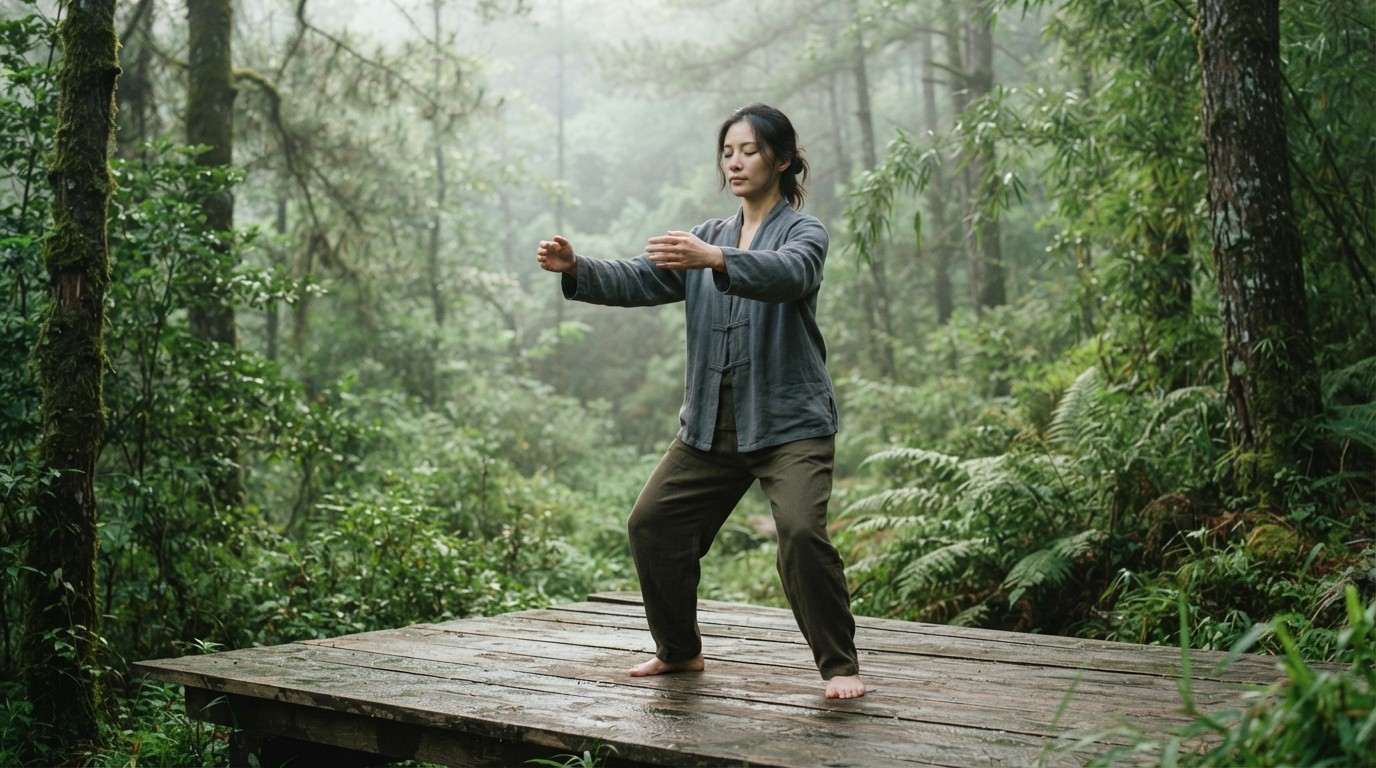
Fitness is valuable. Strength matters. Mobility matters. Cardiovascular capacity matters. Physical resilience matters. But fitness and wellbeing are not necessarily the same thing. Someone can become stronger without becoming more aware of their body. Someone can improve their endurance without learning how to recognise tension. Someone can follow an intense exercise programme while remaining chronically stressed. This does not make fitness unimportant. It simply means that physical capacity is only part of the picture. Life-force Movement approaches the body from a broader perspective, bringing together movement, conscious breathing and internal awareness. Its foundation draws from practices including Hatha Yoga, Qigong, Hunyuan Taiji and Tibetan breathwork. The intention is not simply to make the body perform better. It is to develop a more conscious relationship with the body.
That distinction can change how we think about health. Instead of constantly asking, “How much more can I do?” we can sometimes ask, “How well am I experiencing what I am already doing?” This shift does not mean abandoning physical goals. It means recognising that health can also involve awareness, presence and the ability to understand what the body is communicating.
The Breath Is Where the Practice Begins
Breathing is easy to overlook because it happens automatically. You do not need to remember to breathe during a meeting, and you do not set an alarm to remind yourself to breathe while walking. The body handles it without conscious instruction. But the breath also responds to what is happening inside us. Stress can change breathing patterns. Physical exertion changes them. Emotional experiences can change them. Rest changes them.
This makes conscious breathing practice an interesting entry point into greater body awareness. The goal is not necessarily to take enormous breaths or force the body into relaxation. Sometimes it begins with simply noticing whether the breath feels shallow or comfortable, whether the exhale is rushed, whether the abdomen is moving naturally, whether the shoulders are unnecessarily tense and what happens to the breath when you become frustrated or finally feel safe enough to slow down.
These observations may seem simple, but they can reveal how closely physical experience and mental experience are connected. Within Life-force Movement, breathing is not treated as an isolated exercise. It can be explored alongside movement and awareness, allowing practitioners to develop greater sensitivity to what is happening within the body. That sensitivity is important because you cannot work skillfully with something you never notice.
Movement Can Become a Form of Awareness
Most exercise is measured by output: how many repetitions, how much weight, how many kilometres, how fast or how long. There is nothing wrong with these measurements. They are useful when building physical capacity. But movement can also be experienced differently. Instead of treating the body purely as a machine that needs to perform, you can begin to experience movement as a conversation with the body. Where is the weight shifting?
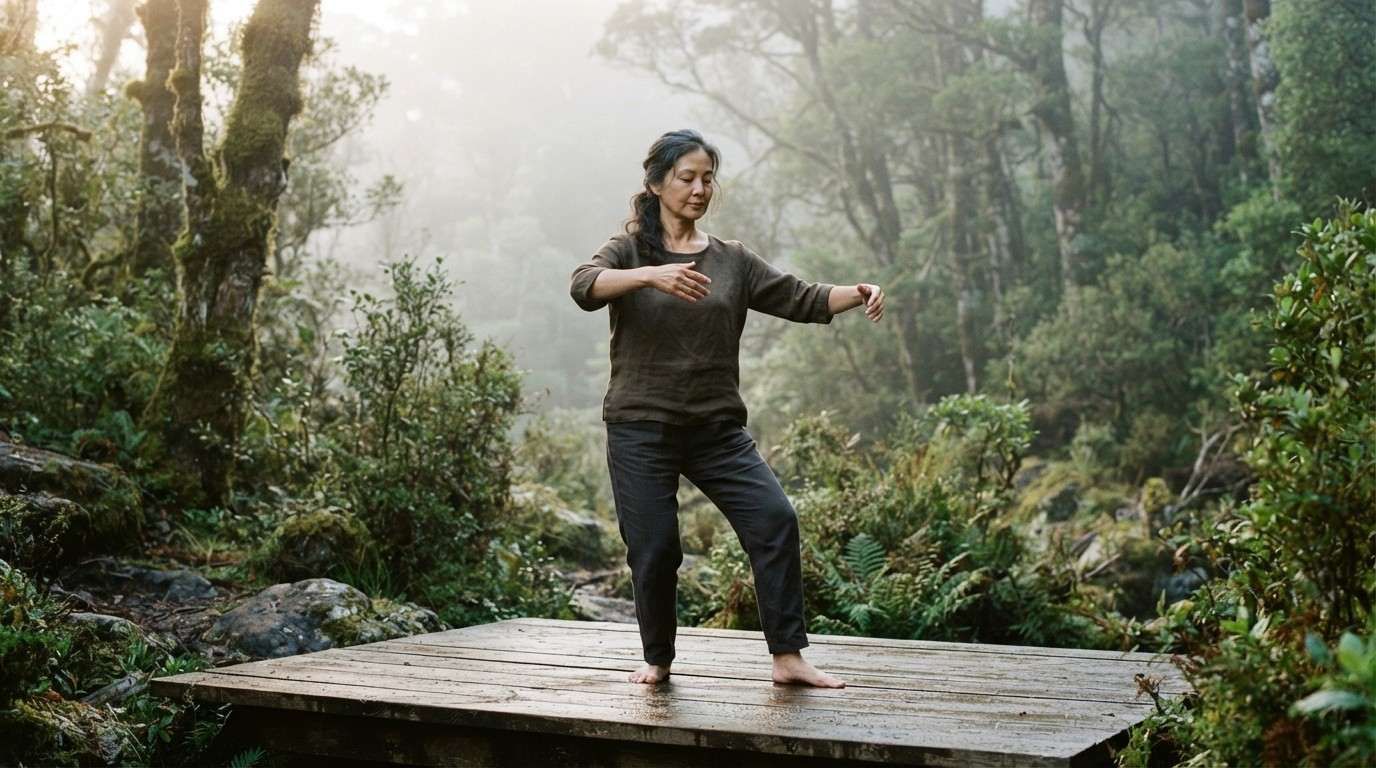
Where is there unnecessary tension? Can you move without rushing? Can you remain aware of your breathing while moving? Can you stay relaxed without becoming passive? These are some of the questions that can emerge through Qigong and Hunyuan Taiji. The movements may appear slow and simple from the outside, but the internal experience can be much more demanding. Slower movement gives you time to notice details that are easily missed when everything happens quickly.
The internal arts can therefore be approached not simply as physical movement, but as a way of cultivating attention, coordination and internal awareness. The body becomes something you listen to rather than something you constantly have to force. That change in perspective can make movement less about chasing performance and more about developing a deeper understanding of how the body moves, responds and adapts.
The Forgotten Skill of Slowing Down
Modern culture rewards speed. Fast communication, fast decisions, fast results, fast workouts and fast content have become normal. Even wellness can become another productivity project: meditate for ten minutes so you can work harder, exercise so you can perform better, sleep so you can become more productive. There is nothing inherently wrong with wanting to function well, but when every practice becomes another tool for producing more, we can lose the ability to simply experience the body. Slowing down offers another possibility. It allows you to notice. A slow movement can reveal tension. A quiet breath can reveal restlessness. Stillness can reveal how uncomfortable we have become with not doing anything.
This is not about becoming passive or withdrawing from modern life. It is about developing the ability to move between activity and stillness without being completely controlled by either. That balance can be especially valuable in a world where constant stimulation has become normal. Sometimes the body does not need another demand placed upon it. It needs enough space for us to actually notice what is already happening.
Energy Is More Than Feeling “Energised”
The word “energy” is often used casually. We say, “I have no energy today,” “That meeting drained my energy” or “Coffee gives me energy.” But energy can also be explored as a subjective experience of vitality, readiness, engagement and aliveness. Life-force Movement uses the concept of life-force within its broader practice of movement, breathing and cultivation. This should not be confused with a scientific measurement of energy in the physical sense. Instead, it is part of a traditional framework for understanding the experience of vitality and internal cultivation.
This distinction matters. Not every traditional concept needs to be presented as a scientific fact. Some practices are rooted in philosophical and traditional systems, while modern research may investigate particular components such as breathing, movement, attention or stress regulation separately. A grounded approach allows both perspectives to exist without pretending they are the same thing. The practical question remains useful: what helps you feel more connected to your body and your experience of being alive?
Hatha Yoga, Qigong and the Internal Arts
One of the distinctive aspects of Life-force Movement is that it does not rely on a single tradition. It brings together Hatha Yoga, Qigong, Hunyuan Taiji and Tibetan breathwork within a broader methodology. Each practice offers a different doorway. Hatha Yoga can develop greater awareness of posture, movement, breathing and physical preparation. Qigong introduces slow, deliberate movement and attention. Hunyuan Taiji explores coordinated movement and internal awareness. Tibetan breathwork introduces more specialised approaches to working with breathing and attention. Together, they create a practice that moves beyond the conventional idea that exercise is simply about making the body stronger or more flexible.
The emphasis becomes integration: body, breath, attention, movement and awareness. Rather than treating these as completely separate parts of wellbeing, Life-force Movement explores how they influence one another. The aim is not to turn traditional practices into a collection of techniques, but to explore how they can support a more conscious relationship with the body and the experience of living in it.
A Different Relationship With Stress
Stress is part of modern life, and the goal cannot realistically be to eliminate every stressful experience. Deadlines will happen. People will disagree. Plans will change. Responsibilities will accumulate. The more useful question may be whether we can become more aware of how we respond. Do we notice tension early? Can we recognise when we are rushing? Can we breathe without immediately trying to control everything? Can we pause before reacting? Can we distinguish genuine physical fatigue from mental overload? These questions are practical because they bring health back into everyday life.
A movement practice does not have to exist separately from work. Breathing awareness does not have to exist separately from relationships. Body awareness does not have to exist separately from difficult days. The real value of a practice is often revealed when life becomes challenging. Instead of expecting a practice to remove stress from our lives, we can use it to become more aware of how stress is experienced in the body and how we respond to it.
Health Needs Space for Recovery
Modern health conversations often focus heavily on what we should add: more exercise, more protein, more supplements, more optimisation and more tracking. But recovery deserves equal attention. The body needs periods of lower demand. The mind needs moments without constant stimulation. Movement needs to be balanced with appropriate rest. This does not mean doing nothing. Gentle movement can itself become restorative when approached with awareness rather than performance. Breathing can provide a moment of pause. Slow Qigong practice can create space to reconnect with the body. Yoga can provide another way to explore movement, posture and awareness.
A retreat can offer an even deeper interruption to ordinary routines.
A Life-force Movement retreat provides an immersive environment for exploring movement, breathwork and internal cultivation away from the normal pace of daily life. You do not necessarily need to leave your life behind to become healthier, but sometimes stepping away from your usual environment makes it easier to see what has become normal.
Health as a Relationship, Not a Checklist
Perhaps one of the biggest problems with modern wellness is that it can become another checklist. Sleep: done. Workout: done. Steps: done. Meditation: done. Healthy meal: done. Another day successfully optimised. But health is not simply a collection of completed tasks. It is a relationship with your body, and relationships require attention. There are days when you will have more energy and days when you will have less. There are periods when your body feels strong and periods when it needs recovery. There are times when movement feels effortless and times when even a short practice feels demanding.
A sustainable approach to health has room for all of this. It does not require you to be perfect. It asks you to pay attention. That may sound simple, but paying attention consistently is very different from occasionally noticing how you feel. It means becoming more familiar with the signals of your own body and recognising that health is not a fixed state that you achieve once and maintain forever.
Starting Without Overcomplicating It
You do not need to immediately learn every practice associated with Life-force Movement. You can start much closer to home. Notice your posture when you are working. Notice your breathing when you are stressed. Take a slower walk without looking at your phone. Spend a few minutes moving without trying to achieve a particular result. Notice where you hold tension. Sit quietly and feel what is happening in your body. The objective is not to turn every moment into a wellness exercise. It is to develop a greater capacity for awareness.
From there, a more structured practice can develop naturally. The Life-force Movement Foundation provides a starting point for exploring the relationship between physical preparation, breathing, movement and awareness. The important thing is to begin where you are, not where you think you should already be. A practice becomes more useful when it can be approached consistently and honestly rather than when it becomes another standard you feel pressured to meet.
A New Approach Does Not Mean Rejecting the Old
Calling Life-force Movement a new approach does not mean that the individual practices are new. Hatha Yoga has a long history. Qigong and Taiji come from established Chinese traditions. Tibetan breathwork comes from traditional systems of practice. What is contemporary is the context in which these practices are being brought together. The modern person is dealing with a very different environment from previous generations. We spend more time with screens. Many people move less during the working day. Attention is constantly interrupted. The boundaries between work and personal life have become increasingly blurred.
In this environment, practices that reconnect movement, breathing and awareness can offer another way of approaching wellbeing. Not as a replacement for medicine. Not as a rejection of science. Not as another promise of instant transformation. But as a way of becoming more aware of the body we already inhabit. The value may lie less in calling the approach “new” and more in recognising how relevant these forms of awareness can become when applied to the realities of modern life.
The Healthier Future May Begin With Awareness
Perhaps the future of health will not be defined only by better technology, more precise measurements or increasingly sophisticated fitness programmes. Perhaps it will also involve something much older: attention. The ability to notice when the body needs movement. The ability to recognise when it needs rest. The ability to feel when breathing has become restricted by tension. The ability to move without constantly measuring performance. The ability to be still without immediately reaching for a screen. These are simple skills, but simple does not mean easy. They require practice.
Life-force Movement offers one framework for exploring these skills through the relationship between movement, breathing, awareness and internal cultivation. Its deeper invitation is not to become someone completely different. It is to become more present in the body you already have. Because health is not only about how long you live, how strong you become or how much you can accomplish. It is also about how you experience the life happening while you are here.
Tags: Life-force Movement · Modern Health · Hatha Yoga · Qigong · Hunyuan Taiji · Tibetan Breathwork · Holistic Wellbeing · Singapore
Start where you are
Explore the Life-force Movement Foundation, private coaching, corporate programmes and retreats.
Explore services More articles