
Life-force Movement (Brand) · Oct 5, 2026
The Ancient Wisdom Behind Modern Resilience
Why real resilience is about awareness and recovery, not simply enduring more.
Modern life has made resilience sound like a performance.
We talk about becoming stronger, handling more pressure, staying productive through uncertainty and bouncing back quickly when things go wrong. We admire people who seem unshaken by demanding careers, family responsibilities, financial pressure and constant change. But there is a problem with the modern idea of resilience: we sometimes confuse resilience with the ability to tolerate more.
That is not necessarily resilience.
Sometimes, constantly pushing through exhaustion is simply exhaustion. Sometimes, staying busy while ignoring what the body is telling us is not strength. Sometimes, the ability to keep functioning under pressure can hide the fact that we have lost the ability to recover.
Ancient movement and contemplative traditions approached this question differently. They were not built around the modern language of productivity, performance or optimisation. Instead, traditions such as Hatha Yoga, Qigong, Hunyuan Taiji and Tibetan breathwork explored the relationship between movement, breath, attention, stillness and what different traditions describe as life-force or internal energy.
Their wisdom was not necessarily about becoming invulnerable. It was about becoming more responsive.
This distinction matters. Modern resilience may benefit from looking beyond the idea of simply enduring more and instead exploring how we adapt, recover, regulate our attention and reconnect with ourselves when life becomes demanding.
Resilience is more than endurance
There is a common assumption that resilient people are simply better at taking pressure. They work longer. They remain calm during difficult situations. They keep moving when everyone else stops. They recover quickly from setbacks. They rarely complain. From the outside, this can look impressive.
But endurance and resilience are not identical.
A person can endure something for a long time while becoming increasingly disconnected from their own body. They can continue meeting deadlines while sleeping poorly, breathing shallowly and carrying unnecessary tension. They can maintain an outward appearance of stability while internally feeling increasingly depleted.
True resilience requires something more dynamic. It involves the capacity to respond to changing circumstances without becoming completely overwhelmed by them. It requires awareness of when to act, when to adapt and when to recover.
This is one reason Life-force Movement approaches movement as more than physical exercise. The practice is interested in the relationship between the body, breathing, awareness and vitality.
Resilience begins when we can actually recognise what is happening within us. If we cannot notice tension, fatigue, agitation or mental overload until they become overwhelming, we have very little opportunity to respond intelligently.
Awareness comes first.
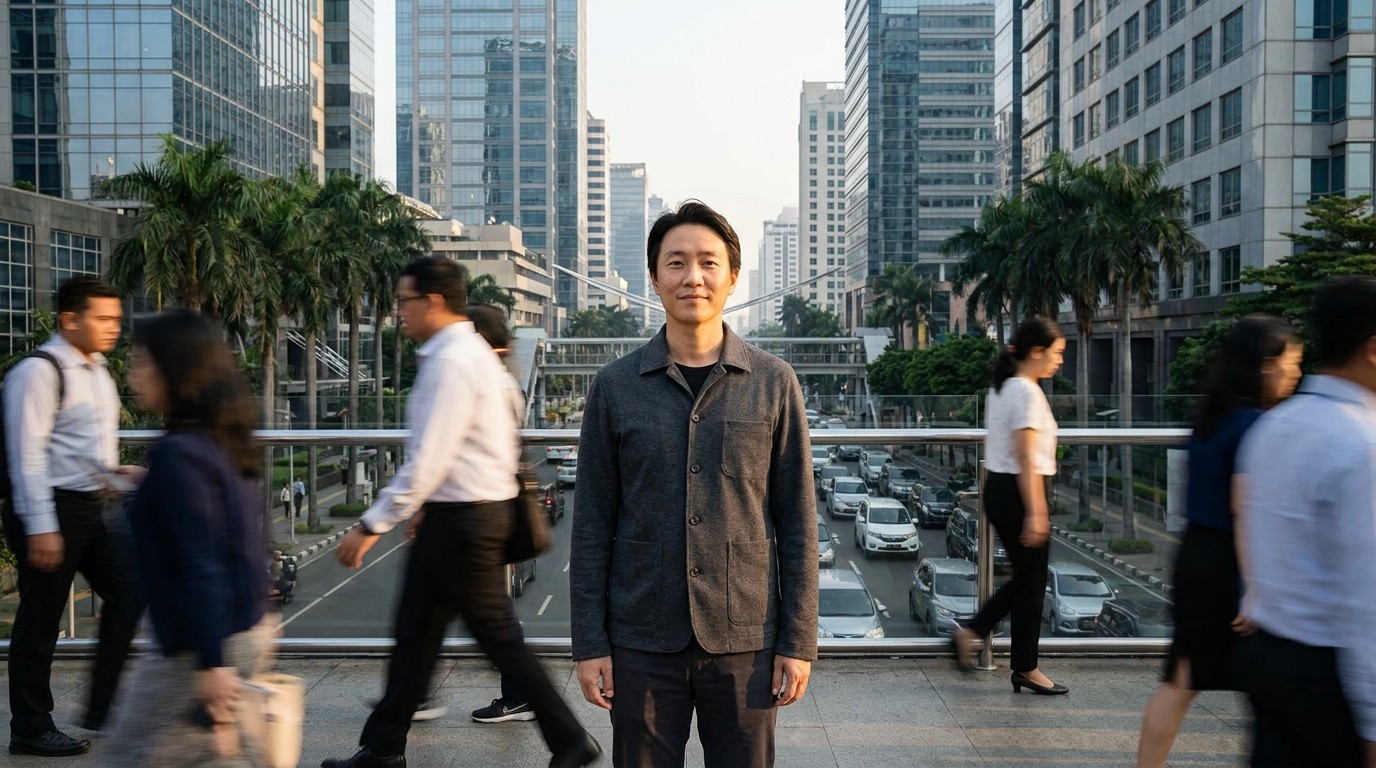
The ancient idea of working with yourself
Many traditional practices begin from an observation that modern life often encourages us to forget: the body is not separate from the way we experience life.
When we are anxious, the body responds. When we are exhausted, movement changes. When we are distracted, breathing may become less conscious. When we spend hours in front of screens, our posture, eyes, shoulders and attention can all be affected.
Traditional systems developed practices for becoming more sensitive to these relationships.
Hatha Yoga, for example, is often reduced in modern culture to physical postures and flexibility. Yet its deeper traditions have long included attention to breathing, concentration, discipline and awareness. The physical body becomes a place through which attention can be cultivated.
Qigong takes another approach. Through slow, deliberate movement, breathing and attention, practitioners explore coordination rather than simply physical exertion. The objective is not always to do more. Sometimes it is to notice more.
This is an important lesson for modern resilience. We often think resilience comes from adding another strategy, another productivity system or another performance goal. Traditional practices can offer a different question:
Qigong and the intelligence of slow movement
Modern exercise culture tends to reward intensity. We measure repetitions, distance, speed, weight, calories and performance. These measurements have value, but they represent only one dimension of our relationship with movement.
Qigong introduces a different quality. The movements are often slow enough that the practitioner can notice transitions that would disappear during faster exercise. Shifts in weight become more apparent. Breathing becomes easier to observe. Small areas of unnecessary tension become easier to recognise.
This makes Qigong practice particularly interesting when thinking about resilience.
Resilience is not only about how much force we can produce. It is also about how efficiently we can shift from one state to another. Can we become active when action is needed? Can we slow down when the situation requires recovery? Can we remain attentive without becoming rigid? Can we respond without immediately reacting?
Slow movement gives us a laboratory for exploring these questions. The body becomes a teacher. Instead of forcing ourselves into a particular state, we learn to observe what is already happening and gradually develop greater control over our response.
Hunyuan Taiji and the art of adaptation
Resilience requires adaptability. Life rarely moves in a straight line. Plans change. Relationships change. Businesses change. Bodies change. Priorities change. Unexpected events can completely alter the circumstances we thought we understood.
Hunyuan Taiji offers an interesting physical metaphor for this reality. Rather than treating movement as a series of isolated actions, Hunyuan Taiji explores continuity, balance, coordination and integration. Movement flows from one position into another. Stability does not necessarily mean becoming rigid. Balance is something that is continuously negotiated.
That idea extends beyond physical practice. Sometimes we believe being strong means holding our position regardless of what happens around us. But rigidity can become a weakness when circumstances change.
A resilient person is not necessarily someone who never moves. A resilient person may be someone who knows how to move without losing their centre.
This is a subtle distinction. Adaptability does not mean abandoning your values every time circumstances change. It means learning how to adjust your response while remaining connected to what matters.
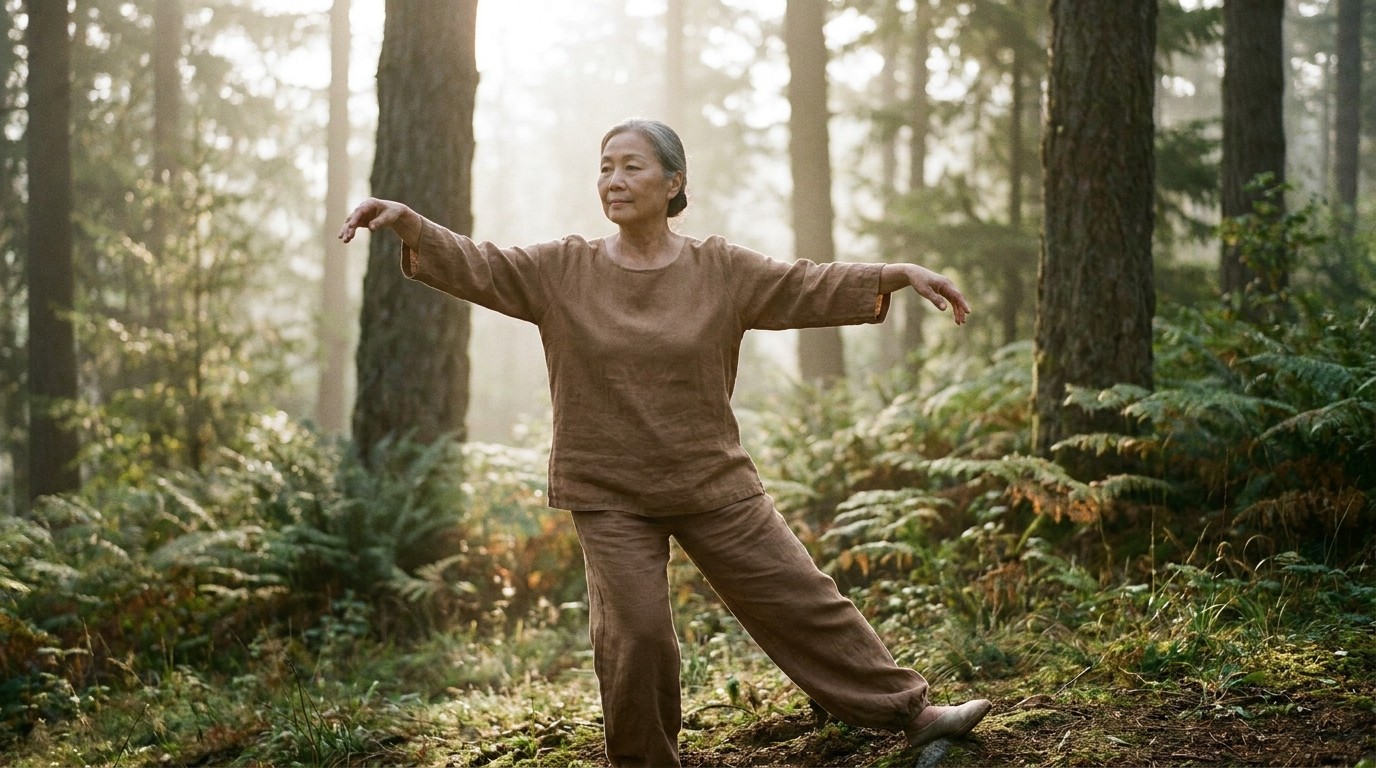
Breathing when life becomes difficult
Breathing is one of the most accessible aspects of resilience because it is always happening, whether we pay attention to it or not. Under pressure, our breathing can become something we barely notice. We may hold the breath, breathe more shallowly or simply lose awareness of the rhythm that is already taking place.
Conscious breathing introduces a pause. It gives us something immediate to observe.
The Life-force Movement Foundation places conscious breathing within a broader relationship between movement and awareness. The goal is not to turn breathing into another performance metric. It is to develop sensitivity.
This can be surprisingly powerful. When we deliberately slow down and observe the breath, we create an opportunity to notice the difference between what is happening around us and how we are responding internally.
That distinction can matter. A difficult email is an external event. The tension we carry after reading it is our internal response. A challenging conversation is an external event. The way we continue replaying it for hours afterwards is another layer. Awareness gives us the possibility of seeing these layers more clearly.
Tibetan breathwork and the discipline of attention
Breathwork appears across many traditional systems, but the approaches and philosophies behind them can be very different. Tibetan breathwork, for example, belongs to a broader tradition in which breathing, attention, contemplation and disciplined practice can be closely connected.
It is important not to strip these traditions of their context or turn them into simplistic promises about instant transformation. Ancient practices are not magic formulas. Their value can also be found in something much simpler: disciplined attention.
Modern life fragments attention constantly. Notifications compete with conversations. Screens compete with silence. Information competes with reflection. We can spend an entire day responding to external demands without spending even a few minutes noticing what is happening inside ourselves.
Traditional breath practices challenge this pattern. They ask us to stay. To observe. To repeat. To become familiar with our own patterns. That familiarity can become a form of resilience because we cannot respond intelligently to something we do not recognise.
Resilience requires recovery
One of the biggest misunderstandings about resilience is that recovery represents weakness. Modern culture often rewards people for continuing. Keep going. Push through. Don't stop. Work harder.
But the body does not operate according to an unlimited productivity model. Recovery is not the opposite of resilience. Recovery is part of resilience.
This is where internal arts practice offers a useful perspective. Many internal practices include periods of stillness, slow movement, breath awareness and sustained attention. They do not constantly demand maximum output from the practitioner.
There is a lesson here for modern life. If every part of your day requires stimulation, performance and output, you may eventually lose the ability to recognise what genuine recovery feels like. Resilience therefore requires space.
Not necessarily hours of meditation or an elaborate wellness routine. Sometimes it begins with a few minutes of consciously slowing down:
- A walk without the phone.
- A quiet breathing practice.
- A slow movement sequence.
- A period of sitting without immediately reaching for another source of stimulation.
The point is not to escape life. The point is to return to it with greater awareness.
Strength without hardening
There is another important lesson hidden inside traditional movement practices. Strength does not always need to feel hard.
Modern strength is often associated with tension, effort and control. Traditional internal practices frequently explore another quality: relaxed strength. This does not mean weakness or passivity. It means learning how to use effort without unnecessary tension.
In movement, this might mean recognising when the shoulders are working harder than necessary. In breathing, it might mean noticing when we are forcing rather than allowing. In everyday life, it might mean recognising when mental resistance is consuming more energy than the situation actually requires.
This is one reason conscious movement can become such a valuable practice. The body gives us immediate feedback. We can feel when something is forced. We can feel when something becomes smoother. We can feel when we are rushing. We can feel when we are holding back. Over time, this sensitivity can influence how we approach challenges outside the practice itself.
Ancient wisdom does not mean rejecting modern life
There is no need to romanticise the past. Ancient traditions emerged in very different societies, under very different circumstances. We should not assume that everything described in an ancient system automatically applies to modern life or that traditional explanations need to be presented as modern scientific fact.
The value is often found in the principles and practices themselves:
- Pay attention.
- Breathe consciously.
- Move with awareness.
- Develop consistency.
- Learn to observe rather than immediately react.
- Recognise the relationship between effort and recovery.
These principles remain relevant regardless of whether we live in an ancient village or a modern city. The modern world gives us extraordinary tools for measuring performance and understanding the human body. Traditional practices can complement that knowledge by reminding us that experience cannot always be reduced to a number.
Health is lived. Resilience is lived. Awareness is lived.
Building resilience through practice
Resilience does not need to begin with a dramatic lifestyle transformation. In fact, dramatic changes are often difficult to sustain. A more realistic approach is to build small practices that increase awareness over time.
You might begin the morning with five minutes of conscious breathing. You might introduce a short sequence of slow movement between periods of desk work. You might practise a few Hatha Yoga postures without treating the session as a workout. You might explore Qigong and Hunyuan Taiji to develop greater sensitivity to movement and balance. You might simply sit quietly for a few minutes and observe your breathing.
The practice itself is less important than the quality of attention you bring to it. Consistency matters more than intensity.
The goal is not to become someone who never experiences stress, uncertainty or difficulty. That is unrealistic. The goal is to become more capable of meeting those experiences without immediately losing connection with yourself.
The deeper meaning of resilience
Perhaps the deepest lesson from ancient movement and contemplative traditions is that resilience is not about becoming harder. It is about becoming more integrated.
The body, breath, attention and mind are not separate compartments that operate independently. They influence one another continuously. When we learn to notice this relationship, resilience becomes less about forcing ourselves through difficult circumstances and more about developing the capacity to respond.
Sometimes that means moving. Sometimes it means resting. Sometimes it means breathing. Sometimes it means changing direction. Sometimes it means remaining still long enough to understand what is actually happening.
This is the deeper territory explored through Life-force Movement: a synthesis of movement, conscious breathing and energy cultivation informed by traditions such as Hatha Yoga, Qigong, Hunyuan Taiji and Tibetan breathwork. The purpose is not to escape modern life. It is to meet modern life with greater awareness.
Resilience as a relationship with yourself
The strongest people are not necessarily those who can carry the heaviest load indefinitely. They may be the people who know when the load needs to change.
They recognise when effort is useful and when effort has become unnecessary struggle. They understand that recovery is not failure. They know that flexibility is not weakness. They can remain grounded without becoming rigid.
This is where ancient wisdom can speak to a modern problem. We do not necessarily need another system telling us how to become more productive. We may need practices that help us become more aware. Because awareness changes the quality of our choices.
When we notice tension earlier, we can respond earlier. When we recognise exhaustion, we can recover before reaching complete depletion. When we notice our attention becoming scattered, we can consciously return to the present moment.
That is resilience in a more human sense. Not the ability to withstand everything. The ability to remain connected to yourself while life continues to change.
Becoming more adaptable, not more hardened
Modern resilience is often presented as the ability to keep going when life becomes difficult. Ancient practices offer another possibility.
Perhaps resilience is not simply about enduring more pressure. Perhaps it is about developing the awareness to know when to act, when to adapt, when to recover and when to let go of unnecessary tension.
Hatha Yoga, Qigong, Hunyuan Taiji and Tibetan breathwork each offer different pathways into this broader exploration. Their traditions are diverse, and they should be approached with respect rather than reduced to fashionable wellness concepts. But one common thread remains valuable: the cultivation of attention.
When we learn to listen to the body, observe the breath and move with greater awareness, we begin to understand resilience differently. We stop treating ourselves as machines that must constantly produce. We begin treating ourselves as living systems that require movement, recovery, awareness and balance.
That may be one of the most important forms of ancient wisdom we can bring into modern life.
To discover how Life-force Movement brings together conscious breathing, movement and energy cultivation, visit victorchng.com.
Tags: Life-force Movement · Resilience · Qigong · Hunyuan Taiji · Breathwork · Ancient Wisdom · Singapore
Begin exploring your own resilience
Discover a practice that helps you reconnect with your body, your breath and your own sense of vitality — one to one, as a corporate programme, or as a retreat.
Explore services More articles