
Life-force Movement (Brand) · Oct 20, 2026
The Connection Between Breath, Energy and Emotional Balance
How breathing, movement and attention can help us notice what we feel and respond with greater awareness.
We breathe thousands of times every day without giving the process much attention.
Breathing continues while we work, walk, sleep, speak and respond to the demands of modern life. Yet, when we feel anxious, frustrated, exhausted or overwhelmed, our breathing can become one of the first things to change. We may hold our breath, breathe more rapidly or develop a sense of tightness in the chest without consciously realising it. At other times, a quiet moment and a few comfortable breaths can help us feel more settled.
This relationship between breathing and emotional experience is worth exploring. Our breath is not a magic switch that can eliminate difficult emotions, nor can it solve every problem that contributes to stress. But it offers a direct way to pay attention to what is happening within us. When we begin observing the breath, we may also become more aware of tension, restlessness, fatigue and the patterns through which we respond to everyday challenges.
Traditional practices such as Hatha Yoga, Qigong, Hunyuan Taiji and Tibetan breathwork have explored these relationships for generations. Within these traditions, breath is often discussed alongside vitality, attention and what is described as internal energy or life-force. These concepts have their own philosophical and experiential meanings, and they should not automatically be treated as scientific explanations of how the body works.
Through Life-force Movement, breathing, movement and energy cultivation can be explored as interconnected dimensions of practice. The purpose is not to control every emotion or force ourselves into a state of permanent calm. It is to develop a more attentive relationship with the body, recognise our internal experience and respond to life with greater awareness.
Your breathing often reflects how you feel
Think about what happens when you receive unexpected bad news, enter a difficult conversation or face an important deadline. You might notice that your breathing changes before you have fully processed the situation. Your shoulders may tighten, your jaw may clench or your breath may become shallow. These responses are not identical for everyone, but they illustrate how closely physical sensations and emotional experiences can interact.
Breathing is influenced by many factors, including physical activity, health, posture and the environment. Emotional states are another influence. When we experience pressure or excitement, the body may shift into a more activated state. When we feel settled, our breathing may become more comfortable and less noticeable. The relationship also works in the other direction: deliberately attending to comfortable breathing may help some people feel calmer or more grounded.
The important point is that the breath can provide information about our present experience. It can help us notice that we are tense before we consciously acknowledge feeling stressed. It can remind us to pause before responding to a frustrating message or continuing a task when our attention has become scattered.
The aim is not to judge every change in breathing as a problem. Sometimes breathing becomes faster because we are walking uphill or exercising. Sometimes our bodies respond to a situation before we have the words to describe what we feel. Awareness begins when we become curious about these changes rather than immediately trying to correct them.
By paying attention to breathing without forcing it, we create an opportunity to understand ourselves a little better. That is a practical starting point for emotional balance.
What does energy really mean?
The word energy appears frequently in conversations about health and wellbeing. We talk about having energy for work, feeling drained after a difficult day or regaining our energy after rest. These expressions describe familiar experiences, but traditional movement systems may use the term in more specific ways.
In practices such as Qigong and Hunyuan Taiji, internal energy is often discussed through traditional frameworks that connect movement, breathing, attention and vitality. Within these systems, practitioners may describe changes in their sense of warmth, groundedness, coordination or internal awareness as part of their experience of practice.
It is important to distinguish this traditional language from established scientific concepts. In physics and physiology, energy has specific meanings. Traditional descriptions of life-force should not automatically be interpreted as a measurable substance moving through the body, and subjective experiences during practice do not, by themselves, prove a particular mechanism.
This distinction does not mean that traditional practices have nothing to offer. Their value can be explored through the experiences they invite: noticing bodily sensations, coordinating movement with breathing, developing concentration and becoming more aware of changes in physical and emotional states.
Within Life-force Movement, energy cultivation can be approached as a traditional and experiential framework for exploring vitality and awareness. Rather than chasing an extraordinary sensation or expecting an instant transformation, practitioners can focus on the quality of their attention and the consistency of their practice.
Sometimes, the most useful question is not whether we can feel a mysterious form of energy. It is whether we are becoming more aware of how we move, breathe, rest and respond to life.
Conscious breathing creates space between feeling and reacting
Emotions can arise quickly. A careless remark can trigger irritation. An unexpected problem can create worry. A demanding day can leave us feeling impatient with people who have done nothing wrong. These reactions are part of human experience, but we do not always need to act on them immediately.
Conscious breathing can provide a small space in which to notice what is happening before responding. This does not mean suppressing an emotion or pretending that everything is fine. It means allowing ourselves a moment to recognise the experience rather than automatically following its momentum.
Consider a familiar situation: you receive an email that feels unfair or confrontational. Your first impulse might be to respond immediately. Before doing so, you pause, notice the breath and observe the tension in your body. The problem has not disappeared, and you may still feel angry. But you have created an opportunity to choose your response more deliberately.
This is one practical reason to explore conscious breathing. The practice is simple, but it can help bring attention back to the present moment. Rather than becoming completely absorbed in a thought or emotional reaction, we have something tangible to observe.
The breath does not guarantee calmness, and it should not be used to avoid necessary conversations or difficult decisions. Sometimes an emotion is telling us that a boundary has been crossed or a situation needs to change. Emotional balance is not about becoming agreeable at all times. It is about understanding our responses well enough to act with greater clarity.
A pause can be small. Its value lies in the possibility it creates.
Qigong: bringing breath and movement together
Breathing exercises are often practised while sitting still, but the relationship between breath and movement can offer another way to develop awareness. When we move deliberately, we have an opportunity to observe how posture, balance, muscular tension and breathing influence one another.
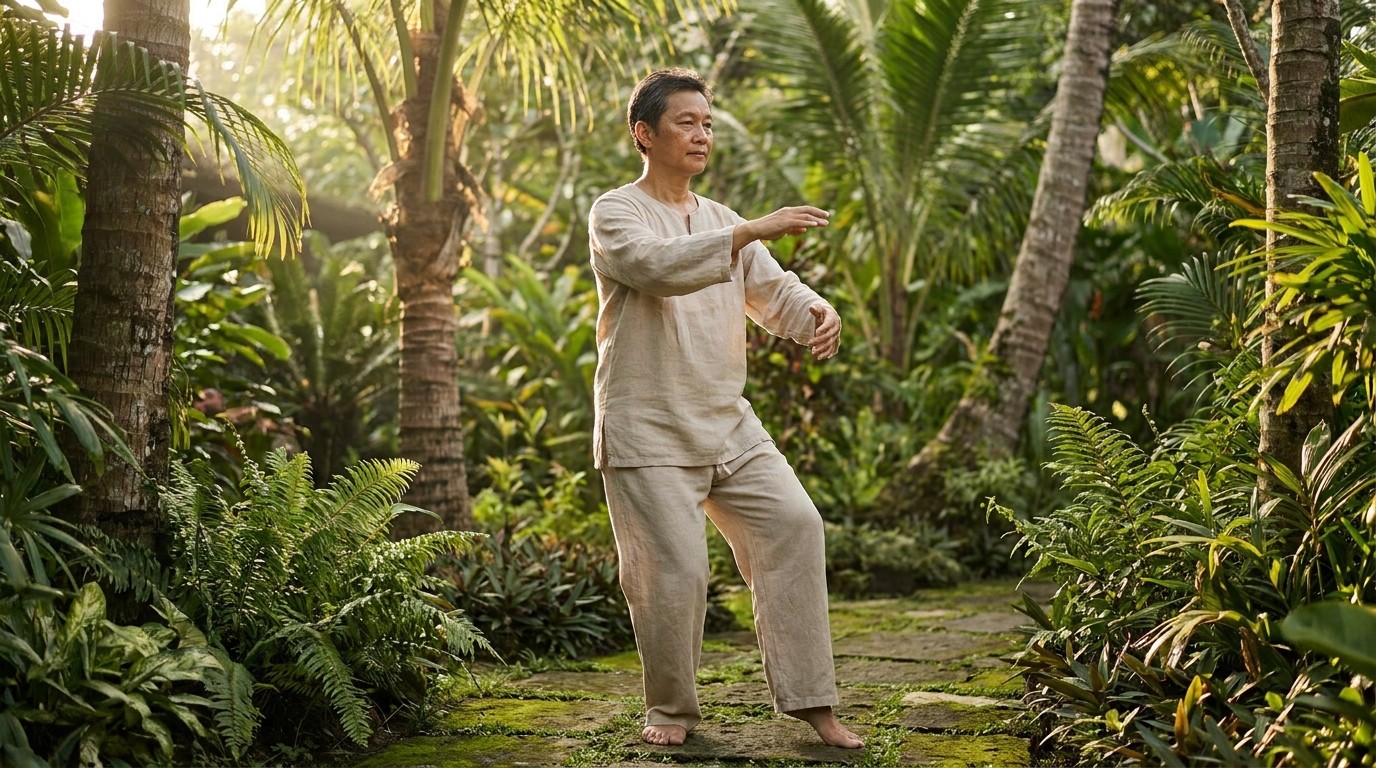
Qigong explores this relationship through practices that may include gentle movements, comfortable standing positions, coordinated breathing and focused attention. Rather than concentrating exclusively on how far a movement reaches or how much effort it requires, practitioners can pay attention to the experience of moving as a whole.
A slow shift of weight, for example, can reveal how the feet connect with the ground and how the body adjusts to maintain balance. The arms may rise and lower while attention remains on comfortable movement rather than muscular force. Breathing can be observed alongside the movement without being pushed into an unnatural rhythm.
Through Qigong and internal arts practice, movement becomes an opportunity to develop sensitivity to the body. Some people find that this slower, attentive approach helps them feel more settled or notice areas of unnecessary tension. Experiences vary, and Qigong should not be treated as a guaranteed treatment for emotional or medical conditions.
Its practical appeal lies partly in its accessibility. You do not necessarily need a demanding workout to begin paying attention to how you move. A gentle practice performed consistently can help you become more familiar with your body's responses.
The objective is not to make every movement perfect. It is to move with enough attention to notice what is happening.
Hatha Yoga and the relationship between body and mind
Emotional experiences do not exist only as thoughts. We can also experience them through the body. Stress may be accompanied by tight shoulders, a clenched jaw or a sense of restlessness. Sadness may affect how we carry ourselves. Excitement may change our breathing and make it difficult to sit still. These physical experiences differ between individuals, but they remind us that the body is part of how we experience life.
Hatha Yoga offers a structured way to explore movement, posture, breathing and attention. While many people first encounter yoga through stretching or physical exercise, the practice can also encourage a more observant relationship with bodily sensations. A posture becomes more than a shape to achieve. It becomes an opportunity to notice the quality of effort, the limits of comfort and the tendency to hold unnecessary tension.
Through Hatha Yoga and foundation practice, we can begin to distinguish between challenging the body appropriately and forcing it beyond what feels manageable. We can notice when we are holding our breath to complete a movement or rushing to reach the next position. We can also learn that it is acceptable to adjust a posture or rest when necessary.
These lessons can be relevant outside the practice itself. When we recognise how tension feels in the body, we may become more aware of the physical signs that accompany frustration, worry or fatigue. That awareness does not remove the source of an emotion, but it can help us recognise our experience earlier.
Emotional balance is not about having a body that never feels tension or a mind that never becomes unsettled. It is about learning to recognise these experiences without automatically turning them into a struggle.
Hunyuan Taiji and the art of remaining grounded
When emotions become intense, people sometimes respond by tightening everything: the body, the voice, the mind and the determination to regain control. We may try to force ourselves to stop feeling something or insist that a difficult situation must be resolved immediately. Yet, the harder we fight our internal experience, the more exhausting the struggle can become.
Hunyuan Taiji offers a useful physical metaphor for another approach. Through continuous, coordinated movement, practitioners explore the relationship between stability, flexibility and change. Balance is not simply a fixed position. It involves ongoing adjustments as the body moves through different positions and directions.
In Hunyuan Taiji and internal arts, the practitioner can explore how to remain grounded without becoming rigid. Movements are performed with attention to coordination and continuity rather than unnecessary force. The emphasis is not on resisting every change but on learning to move through change with greater awareness.
This principle can be applied cautiously to emotional life. Remaining grounded does not mean refusing to feel anger, sadness, fear or disappointment. Nor does flexibility mean accepting every situation without question. It means recognising what is happening and responding in a way that fits the circumstances.
Sometimes the appropriate response is to stay with a difficult conversation. Sometimes it is to step away and return when emotions have settled. Sometimes it is to set a clear boundary or seek help. A grounded response is not always a quiet one; it is a considered one.
The lesson is that balance is not the absence of movement. It is the ability to adjust without losing sight of what matters.
Tibetan breathwork and the discipline of attention
Breathwork appears in many traditions, but the methods, aims and philosophies can differ considerably. Tibetan breathwork belongs to a broader landscape of contemplative practices in which breathing, attention and disciplined training may be connected with particular views of mind and experience.
These traditions deserve to be approached with respect for their context. Their methods should not be reduced to quick wellness hacks, and traditional explanations should not automatically be presented as scientific findings. Some practices may also be physically demanding or unsuitable for certain individuals, making qualified instruction important.
One accessible lesson is the value of sustained attention. Much of modern life encourages us to move quickly between different sources of stimulation. We read messages while listening to conversations, check notifications while working and carry unfinished tasks in our minds even when the day has ended. Our attention becomes accustomed to leaving one experience before we have fully noticed it.
Exploring Tibetan breathwork within an appropriate learning context can introduce a more deliberate relationship with breathing and awareness. The aim is not necessarily to empty the mind. Thoughts, memories and emotions will continue to arise. The practice is to recognise them without automatically following every one of them.
This is a discipline that extends beyond formal breathing sessions. Listening to another person without preparing our reply, eating without constantly checking a screen or completing one task before opening another can all become opportunities to practise attention.
We cannot control everything that enters our awareness. We can, however, develop a more considered relationship with where our attention goes.
Emotional balance does not mean feeling happy all the time
The pursuit of emotional balance can sometimes become another form of pressure. We may start believing that a good practice should make us calm, that a difficult emotion means we have failed or that a peaceful person should never become frustrated. This expectation can make ordinary human feelings seem like problems that must be eliminated.
But emotional balance is not permanent happiness.
Anger may signal that something feels unfair. Sadness may arise after a loss. Fear may alert us to a possible threat. Frustration may reveal that our expectations need to change. Emotions can provide information, although interpreting that information requires care. Not every feeling accurately describes the situation, and not every impulse deserves to be acted upon.
Breathing and movement practices can help create opportunities to observe these experiences. Rather than immediately suppressing an emotion, we can notice its physical sensations, recognise the thoughts accompanying it and give ourselves time to decide what to do next.
For example, a person who feels overwhelmed at work may benefit from a brief pause and a few comfortable breaths. But if the underlying cause is an unreasonable workload, persistent conflict or inadequate rest, breathing alone will not solve the problem. A lasting response may require a conversation, a change in responsibilities, better boundaries or professional support.
This distinction matters. Practices such as Life-force Movement can complement a broader approach to wellbeing, but they should not be treated as substitutes for medical care or mental health support when these are needed.
The goal is not to become emotionally untouchable. It is to develop the awareness to experience emotions without being entirely governed by them.
A simple daily practice for breath and awareness
You do not need to master a complex technique to begin exploring the relationship between breathing and emotional experience. A simple, comfortable practice can provide a starting point, particularly if you approach it with curiosity rather than expecting a particular result.
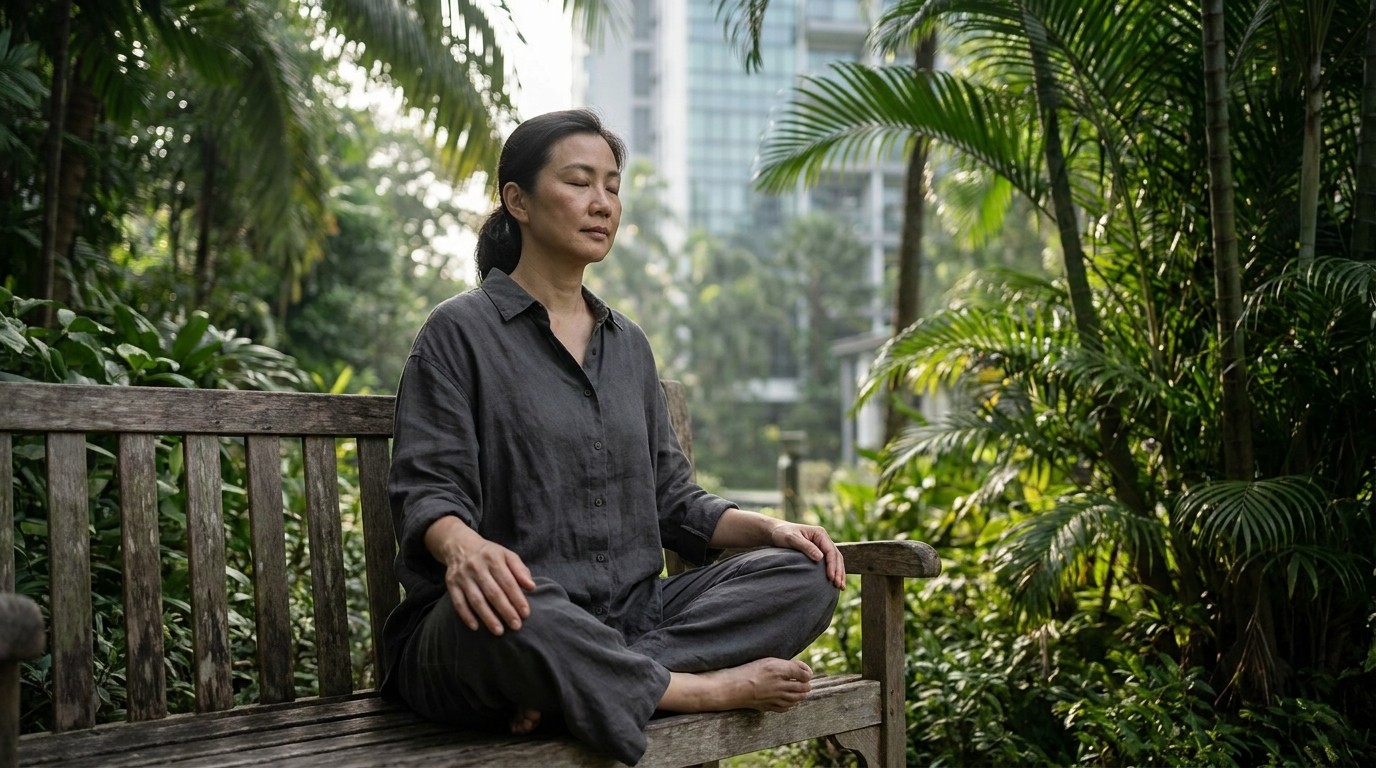
Choose a quiet place where you can sit comfortably. Allow your shoulders to relax and let your breathing continue naturally. For a minute or two, notice the movement associated with each breath. You might feel the chest rise and fall, notice the air passing through the nose or simply recognise the rhythm of inhaling and exhaling. There is no need to breathe as deeply as possible, hold your breath or follow a strict count.
As you continue, notice whether your attention wanders. You may remember a task, replay a conversation or begin planning the rest of your day. When this happens, acknowledge the distraction and return to observing the breath. The purpose is not to prevent thoughts from appearing. It is to practise noticing when attention has moved elsewhere.
You can then introduce a little gentle movement. Roll the shoulders comfortably, stand and stretch within your natural range or take a short walk while paying attention to the sensation of moving. Avoid forcing any posture or coordinating the breath in a way that feels uncomfortable.
This simple routine can become part of a broader Life-force Movement foundation practice. Begin with a manageable duration and adjust according to your circumstances. If focusing on breathing causes dizziness, distress or increased anxiety, stop and return to your normal breathing. You can instead focus on the feeling of your feet on the ground or the ordinary sounds around you.
Consistency matters more than complexity. The aim is to build a habit of paying attention, not another demanding routine to complete perfectly.
Making space for emotional recovery in modern life
Even when we understand the importance of breathing and awareness, it can be difficult to practise them consistently. Work demands, family responsibilities, financial concerns and constant digital communication can leave little room for reflection. We may only notice how exhausted we are when our patience has worn thin or our bodies begin demanding rest.
Creating space for emotional recovery does not necessarily require a dramatic change in lifestyle. It may begin with small boundaries that make everyday life more manageable. Taking short breaks between demanding tasks, moving regularly throughout the day, protecting time for sleep and spending time outdoors can all contribute to a more sustainable routine.
We can also become more intentional about transitions. Rather than carrying the tension of one meeting straight into the next, pause briefly before beginning another task. Instead of immediately checking messages when waking up, take a moment to notice how you feel. At the end of the day, create a simple ritual that helps mark the transition from work to personal time.
A regular internal arts practice may offer another opportunity to slow down and reconnect with bodily awareness. For some people, a structured session or a guided Life-force Movement retreat provides dedicated space to explore movement, breathing and attention away from everyday distractions.
The aim is not to avoid every difficult emotion or eliminate all sources of stress. Modern life will continue to present challenges. The more realistic goal is to create regular opportunities to recognise how we are responding and to make changes when necessary.
Emotional balance develops through the way we live, the choices we make and the support we receive, not through one technique alone.
Returning to the breath, returning to yourself
Breathing is an ordinary part of life, yet it can become a useful doorway into greater awareness. It gives us something immediate to observe when our attention is scattered, our bodies are tense or our emotions feel difficult to understand. Through conscious breathing, we can practise pausing long enough to notice our experience before deciding how to respond.
Traditional systems such as Hatha Yoga, Qigong, Hunyuan Taiji and Tibetan breathwork offer different ways to explore the relationship between breathing, movement and attention. Their concepts of internal energy belong to particular traditions and should be approached thoughtfully. Their practices can still invite meaningful questions about how we experience vitality, how we move through daily life and how we relate to our own bodies.
Emotional balance does not mean never becoming upset. It does not require us to remain calm in situations that need to change. It means developing the awareness to recognise our feelings, understand their context and choose responses that serve us better.
Sometimes, that begins with a comfortable breath. Sometimes, it begins with gentle movement or a decision to rest. Sometimes, it requires a difficult conversation, a change in circumstances or support from someone qualified to help.
The breath is not a solution to everything, but it is always worth noticing. It reminds us that even in a demanding day, we can sometimes create a small space to reconnect with the present moment.
To discover how Life-force Movement brings together conscious breathing, movement and energy cultivation, visit victorchng.com.
Tags: Life-force Movement · Conscious Breathing · Emotional Balance · Qigong · Hatha Yoga · Singapore
Begin with one comfortable breath
Discover a practice that helps you reconnect with your body, your breath and your own sense of vitality — one to one, as a corporate programme, or as a retreat.
Explore services More articles